Externally Pressurized Bellows
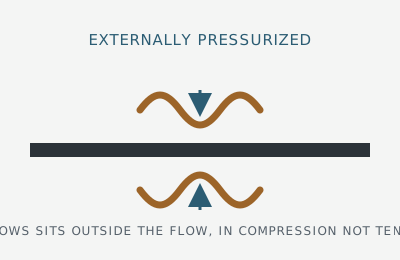
In a standard bellows, line pressure acts on the inside of the convolutions, putting the material in tension and — at high pressure — making it prone to a buckling failure mode called squirm. An externally pressurized bellows flips that arrangement so pressure acts from the outside, placing the convolutions in compression instead.
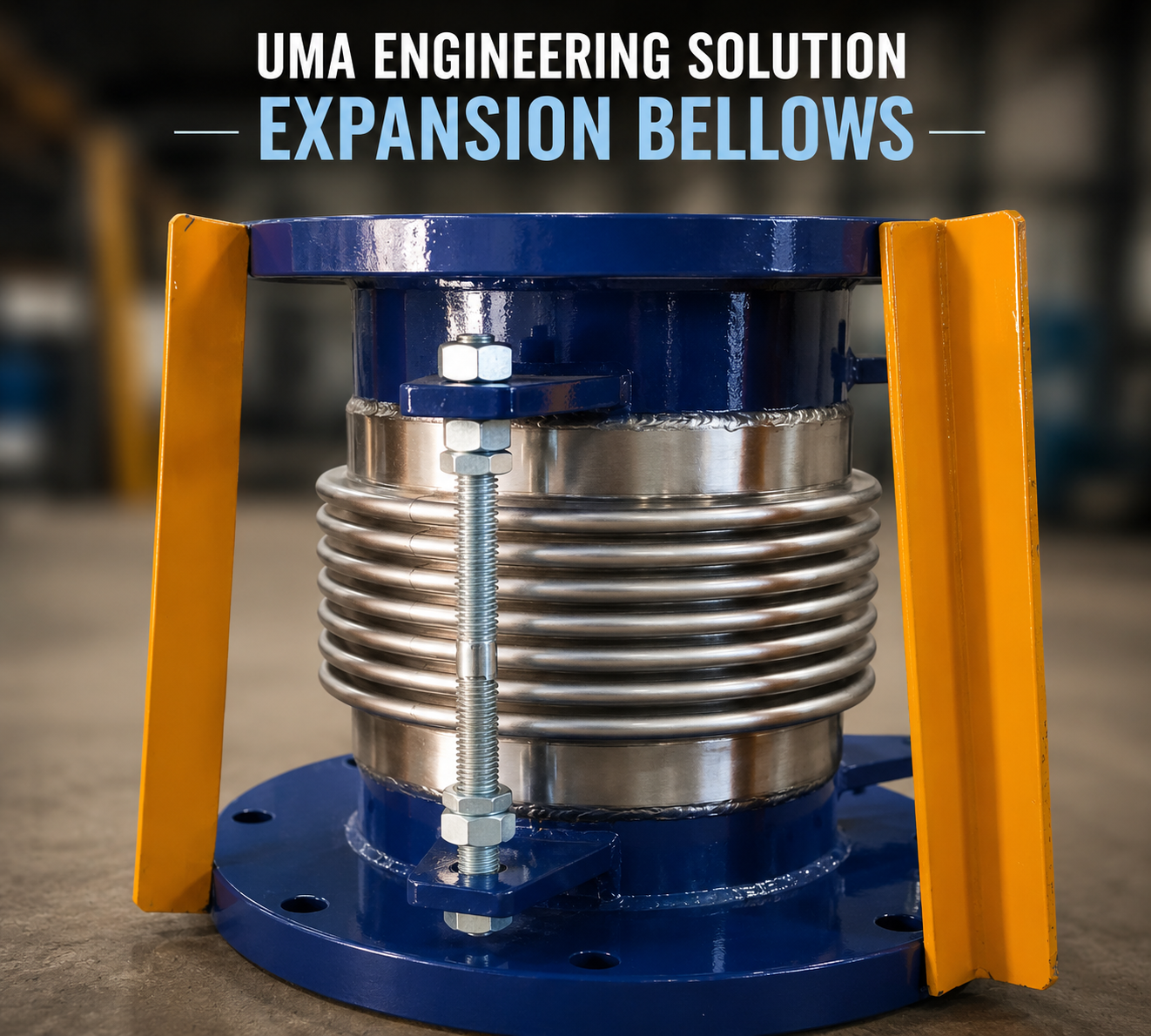
Representative example — real Uma Bellows expansion joint:
How it works
Compression is a more stable loading condition for a thin convoluted shell than tension at high pressure, which is why this configuration is preferred for high-pressure axial applications where standard internally-pressurized bellows would need to be significantly overbuilt to avoid squirm.
- Line pressure loads the convolutions in compression, not tension
- Improves resistance to squirm (buckling instability) at high pressure
- Preferred for high-pressure axial applications
- Verified against squirm failure in Uma Bellows' own destructive testing
Related: High-Pressure Bellows · Tied Expansion Joint · Certifications
Request a Quote